Some of my earlier well-known origami like WXYZ and Blintz Icosidodecahedron belong to the genre of planar modular origami. These were inspired by work by earlier folders like Robert Neale‘s Skeletal Octahedron (mid 1960s), ED Sullivan‘s XYZ (1976) and Philip Shen‘s Omega Star (1976).
Meenakshi Mukerji (2003) observed that one family of planar modular origami has a pattern: each model has n (n – 1)-pointed stars (where n = 3 or is between 5 and 9). For example, WXYZ has 4 3-pointed stars. She called some of the underlying polyhedra ‘uncoventional’. (When n = 4, the polygons buckle and are no longer planar)
I have made some of these shapes, and others, that have a more secure assembly and balance ease of assembly against security. I have also use Mukerji’s naming convention following WYXZ, even if they can become unwieldy.

Another genre of modular origami is wireframe origami, where polyhedra are made using edge units (instead of face or vertex units) and have almost-hollow faces. A subgenre of wireframe origami uses interlocking wireframes: a famous example is Five Intersecting Tetrahedra by Tom Hull (1997) using modules by Francis Ow:

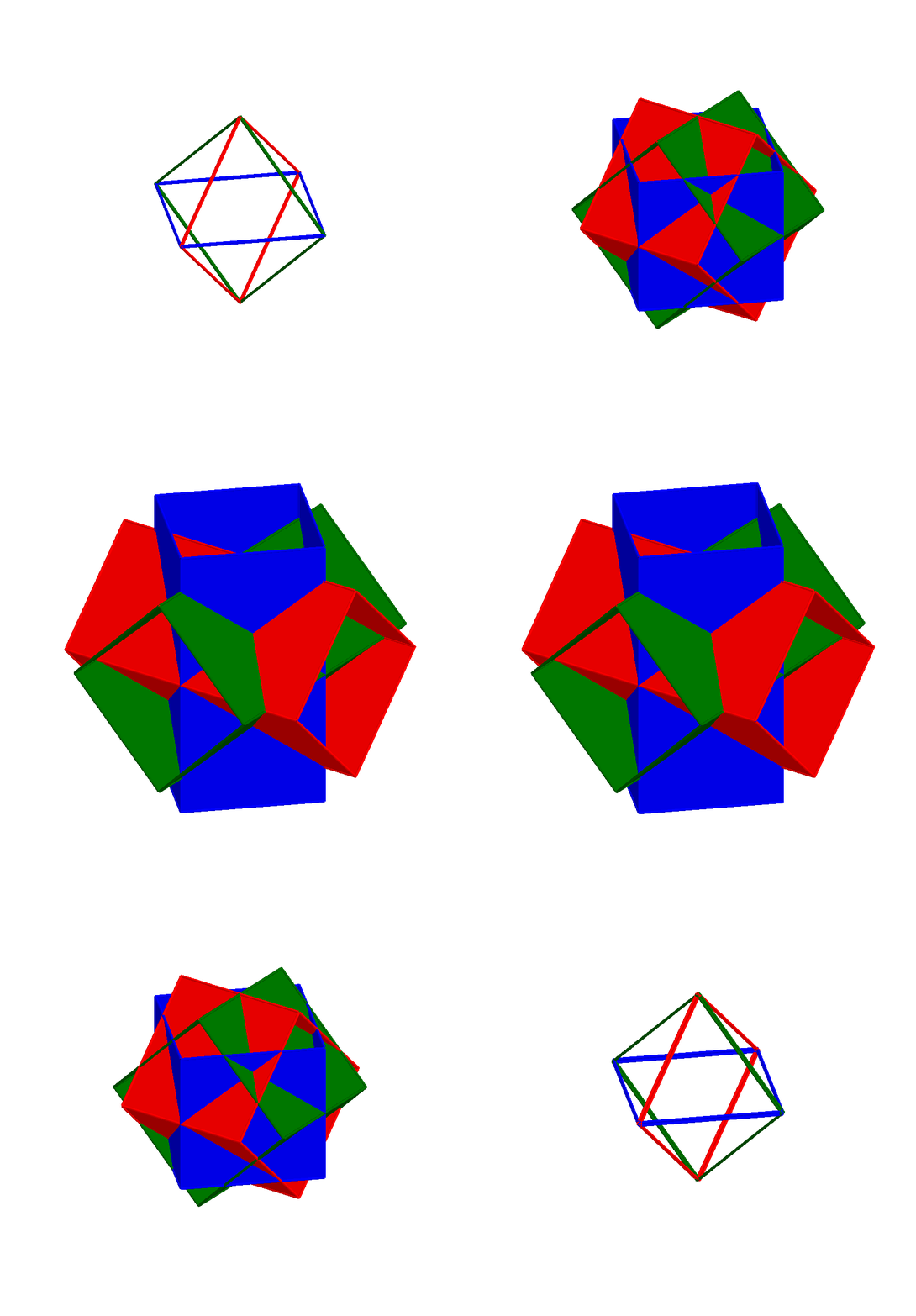
A pleasing family of interlocking wireframes uses prisms. Daniel Kwan made Four Triangular Prisms (2003) and Six Pentagonal Prisms (2007). I found these hard to assemble so I used different units, starting with three square prisms.




Where do these prisms come from, and how are they arranged? The square prisms seem straightforward, but I was puzzled about the others. I realised than shrinking the prisms so that opposite faces coincide produces WXYZ and the Blintz Icosidodecahedron (with regular pentagons).
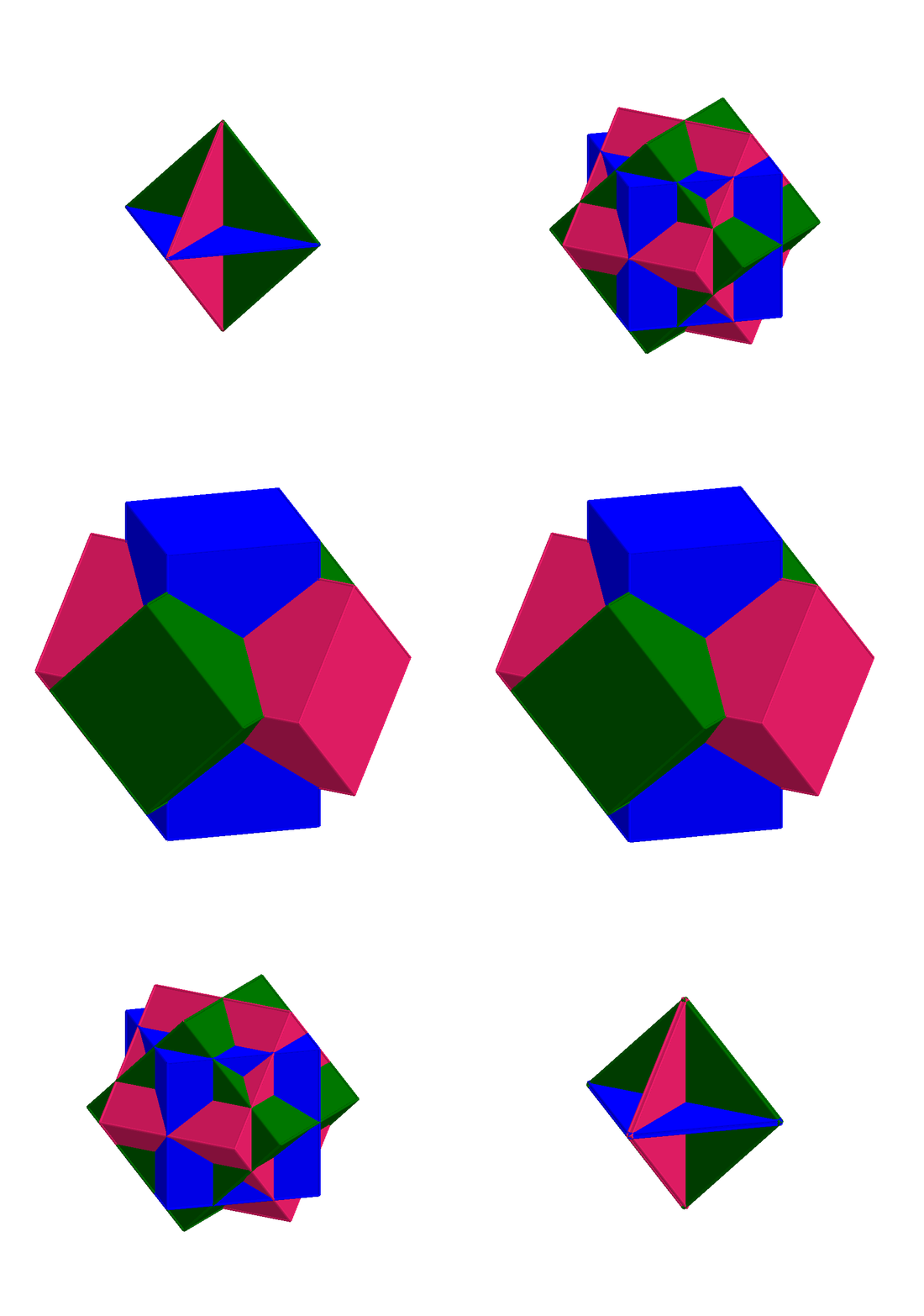
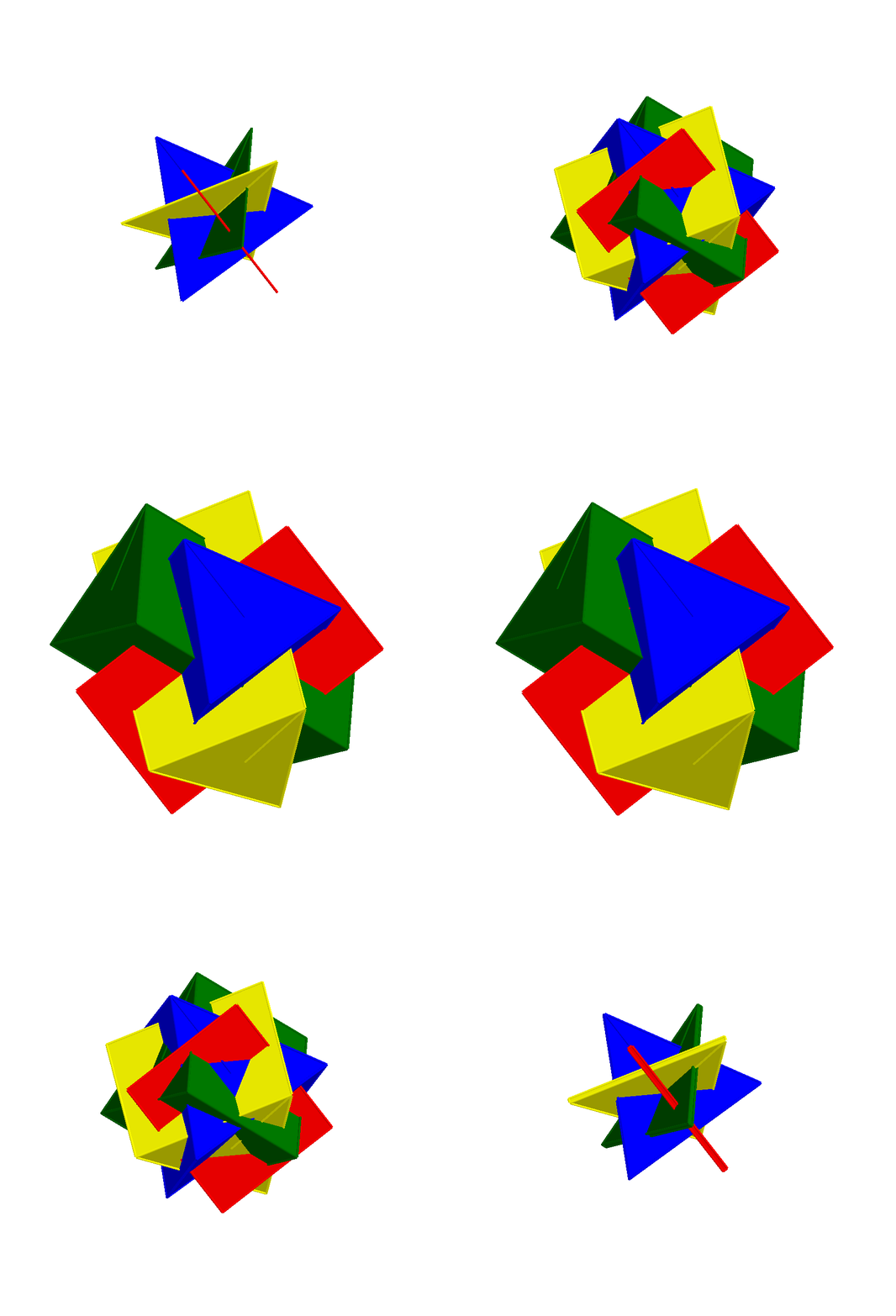
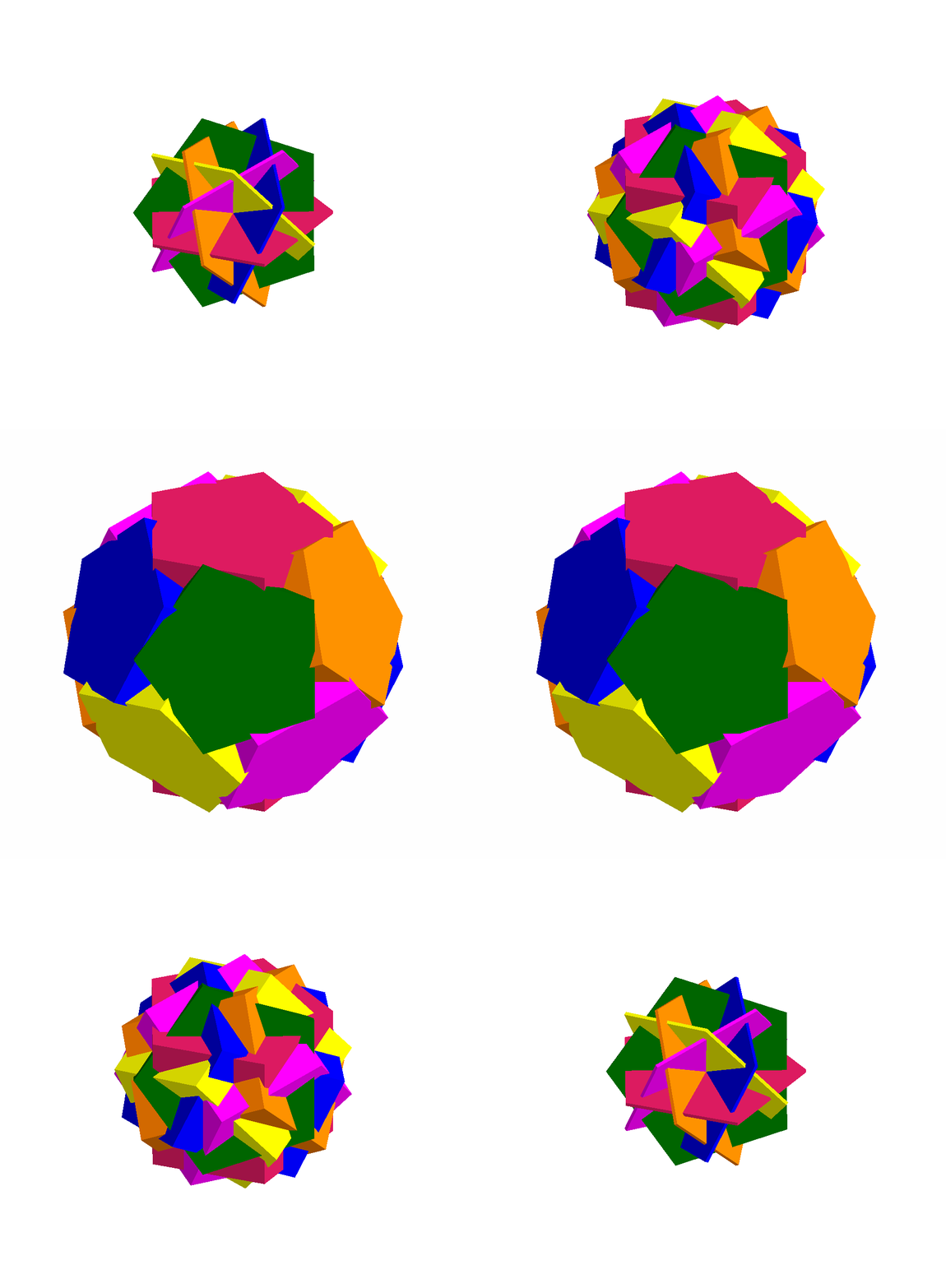
Each animation has interesting configurations. Remove faces from the cube reveals some intriguing shapes.
Some of these shapes can be made using George Hart’s Slide-Together technique: